In hot and humid markets like Vietnam, Thailand, the Philippines and Indonesia, a foundation or primer that looks satin at 8 a.m. can turn shiny by noon. Silicone elastomer powders solve this by absorbing excess sebum, scattering light to blur pores and fine lines, and giving a velvet-matte skin feel without the chalky dryness of traditional clay or starch. This guide explains how the four W701–W704 grades differ, and which one to start with depending on whether your formula is a liquid foundation, a pressed powder or a cushion BB.
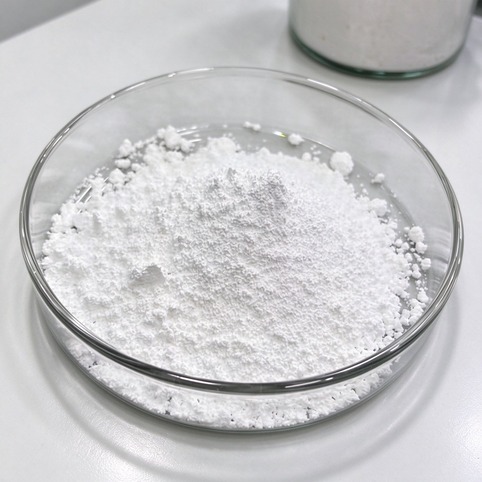
What silicone elastomer powder actually does
Silicone elastomer powders are crosslinked silicone microspheres. Unlike conventional fillers such as talc or silica, they are organophilic, hydrophobic and compressible. In a cosmetic formula they do three jobs at once:
- Optical blurring / soft-focus. The microspheres sit on top of skin and scatter light. Pores, fine lines and minor unevenness are visually softened without adding coverage pigment.
- Oil absorption and sebum control. The porous, crosslinked structure soaks up sebum throughout the day, extending wear-time and reducing the mid-day shine that is a constant complaint in tropical climates.
- Sensory upgrade. They replace the greasy or tacky after-feel of oils and butters with a silky, velvety, ball-bearing-like slip that consumers describe as “powdery but not dry.”
The net result is a formula that feels lighter, stays matte longer and photographs better—which is why silicone elastomer powders have become standard in mattifying primers, long-wear foundations, BB cushions, pressed powders and even some oil-control skincare serums.
Four grades, four textures
The particle size, crosslink density and surface treatment of each grade determine whether it disappears into a liquid formula or adds a deliberate powdery drag. Here is how the W701–W704 line splits.
| Grade | INCI | Typical particle size | Key feel | Best for |
|---|---|---|---|---|
| W701 | Vinyl Dimethicone/Methicone Silsesquioxane Crosspolymer | ~8.0 μm | Silky-refreshed, easy dispersion, high oil-adsorption, gels quickly with oils | Liquid foundations, cream-to-powder products, oil-control primers |
| W702 | Dimethicone/Vinyl Dimethicone Crosspolymer (and) Silica | 3.0–10.0 μm | Flowable, fine-line covering, superior powder flow | Pressed powders, loose powders, translucent setting powders |
| W703 | Dimethicone/Vinyl Dimethicone Crosspolymer | ~41 μm | Refreshing, wrinkle-covering, high oil-adsorption, matte mist finish | BB cushions, cream foundations, heavier soft-focus |
| W704 | Dimethicone Crosspolymer | ~35.0 μm | Velvety, bouncy, long-lasting oil-control, wear resistant, reduces heaviness | Long-wear foundations, mattifying primers, sweat-resistant formulas |
See the full silicone-powder range and COA notes.
How to choose by product format
Start with the marketing claim and the physical form of the product, then match the particle size and oil absorption.
| Your target | Start with | Why |
|---|---|---|
| Liquid foundation or cushion BB | W701 or W703 | Small-to-medium particles disperse cleanly in emulsions and give a matte, refreshed finish without settling. |
| Pressed or loose setting powder | W702 | Flowability and fine-line cover matter more than heavy oil loading; W702 spreads evenly and feels silky. |
| Mattifying primer | W701 or W704 | High oil-adsorption plus a velvety after-feel; W704 also helps the formula resist sweat and transfer. |
| Long-wear / sweat-resistant foundation | W704 | Reduces formula heaviness and greasiness while keeping the matte film intact. |
| Wrinkle-blurring / soft-focus primer | W703 or W704 | Larger particles sit in fine lines and scatter light more aggressively, creating the “soft focus” effect. |
Formulation tips that keep the powder working
- Disperse in oil or silicone first. Dumping the powder straight into the water phase usually causes clumping. Pre-disperse in dimethicone, caprylyl methicone or a lightweight ester before adding to the emulsion.
- Watch the use level. A starting point is 2–5% for a natural skin finish, 5–8% for a clearly matte or oil-control claim. Beyond 8% the formula can start to feel mask-like or pill.
- Pair with the right volatile carrier. Combining the powder with W201, W202 or W203 keeps the initial spread light and prevents the formula from dragging during application.
- Test under real climate stress. A panel test at 30°C and 75% RH for four hours tells you far more about sebum control than a lab viscosity reading.
For the broader question of choosing a dimethicone base fluid by viscosity, see the 5–1000 cSt dimethicone guide. If you are also reformulating around D4/D5 restrictions, the D5 switchover guide covers compliant volatile alternatives.
Three mistakes that kill the matte effect
- Adding powder straight to water. It will agglomerate and leave streaks on skin. Always pre-disperse in a compatible oil or silicone.
- Using W703 or W704 in sheer / transparent formulas. The larger particle size can show as a white cast or visible specks in a clear gel. For transparent products, W701 or W702 are the safer starting point.
- Overloading to chase oil control. More powder does not always mean less shine. Past the sweet spot the film becomes heavy, accentuates texture and can ball up under friction.
FAQ
What is the difference between W701 and W704?
W701 has a smaller particle size of around 8.0 μm and disperses very easily in liquid foundations and primers; it gives a silky-refreshed feel and high oil adsorption. W704 has a larger particle size of around 35.0 μm and a more velvety, bouncy powder texture; it is better for long-wear, sweat-resistant and heavy oil-control formulas.
Can silicone elastomer powder replace talc or silica?
Partially. Silicone elastomer powders absorb sebum and improve sensory feel, so they can reduce the amount of talc or fumed silica needed. They are not a one-to-one replacement by weight, because they have lower bulk density and different coverage. Most formulators use them together, lowering talc/silica levels by 20–40% while keeping the matte claim.
Does silicone powder cause flashback in photos?
Not when the particle size and use level are matched to the formula. Finer grades such as W701 and W702 are less likely to flash back than coarse, uncoated silica. Avoid large-particle grades at high levels in flash photography products unless you specifically want a brightening effect.