This article covers W412 and W422 as water-dispersible silicone surfactants — it does not cover building water-in-silicone (W/Si) or water-in-oil (W/O) emulsions. For that, see our W408–W422 formulator guide. Most formulators know dimethicone as an oil-soluble silicone: great for slip and spread, but it will not mix with water on its own. PEG-12 dimethicone changes that. By grafting polyethylene glycol chains onto the silicone backbone, grades such as W412 and W422 become water-dispersible silicone surfactants — they stir into the water phase, bring silicone gloss, slip and conditioning, yet rinse clean without building a full emulsion. For brands in hot, humid Southeast Asia and the Middle East, that means clear serums, lightweight hair conditioners and refreshing body mists can all carry a silicone finish without the heavy feel of an oil phase. This guide focuses on what W412 and W422 do best: acting as water-dispersible modifiers, not primary emulsifiers.
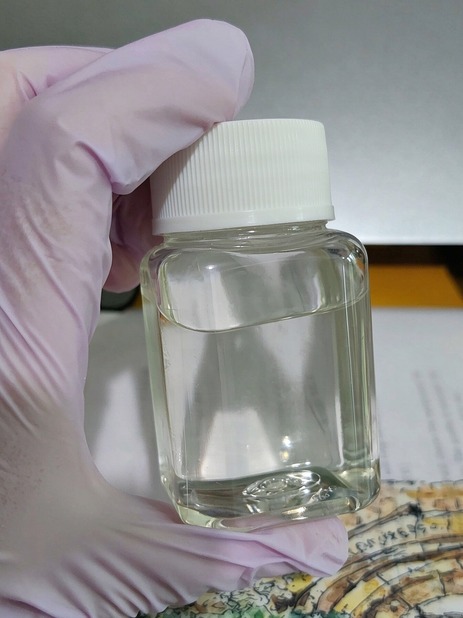
What makes PEG-12 dimethicone water-dispersible
Standard dimethicone is a polydimethylsiloxane — entirely non-polar, so it stays in the oil phase. PEG dimethicones attach polyethylene glycol (PEG) side chains that are water-loving. The more PEG units, the more water-compatible the molecule becomes.
| Property | Dimethicone (W201) | PEG-12 Dimethicone (W412) | Bis-PEG-12 Dimethicone (W422) |
|---|---|---|---|
| PEG / EO units | 0 | ~12 | ~12 (on both ends) |
| Water dispersibility | None (oil only) | Disperses in water | Readily disperses / soluble feel |
| HLB (approx.) | 0 | ~12.2 | ~14.7 |
| Primary role | Slip, spread, film former | Water-dispersible gloss and slip modifier | Water-dispersible gloss, transparency, conditioning |
| Best fit | Oil-phase serums, emulsions | Clear serums, hair care, body mists | Transparent gels, micellar water, foam systems |
W412 (PEG-12 Dimethicone) is the workhorse water-dispersible grade: it disperses into water, adds gloss and slip, and is easy to handle in most aqueous systems. W422 (Bis-PEG-12 Dimethicone) is the more hydrophilic cousin — PEG chains on both ends push it toward transparency and a cleaner rinse, which is why it suits clear and water-thin products.
Transparent serums, mists and micellar systems
Where PEG-12 dimethicone earns its place is in products that must stay clear and feel light.
- Clear or translucent serums. A small dose of W412 (0.5–2%) disperses into the water phase and leaves a silky, non-tacky film — useful for hydrating serums and scalp tonics where a greasy after-feel is unacceptable.
- Facial and body mists. W422 keeps the formula transparent and adds a soft, conditioned skin feel after the water evaporates, without the cloudiness some oils cause.
- Micellar waters and cleansing waters. W412 helps solubilise and conditions at the same time, giving a silicone feel to an otherwise plain aqueous cleanser.
Hair care: conditioning that rinses clean
In hair care, PEG-12 dimethicone is valued because it conditions like a silicone but disperses in water, so it does not build up the way some oil-soluble silicones can.
| Product | Grade | Use level | What it delivers |
|---|---|---|---|
| Shampoo or cleansing conditioner | W412 | 0.5–2% | Slip during wash, easier detangling, less friction |
| Rinse-off hair mask | W412 or W422 | 1–3% | Silky after-feel, shine, heat-protective feel |
| Leave-in or scalp serum | W422 | 0.5–2% | Light conditioning without greasy residue |
| Heat-protectant spray | W412 | 0.5–1.5% | Lubrication and a dry, conditioned touch under heat |
Because W412 and W422 disperse in water, they are easier to incorporate into surfactant-based and rinse-off hair systems than dimethicone, which would need an emulsion or dedicated delivery system.
Rinse-off and foam systems
PEG-12 dimethicone also upgrades the feel of everyday wash products.
- Body wash and shower gel. W412 at 0.5–1.5% improves after-feel and adds a conditioned, non-tight finish after rinsing.
- Shampoo foam quality. It can stabilise and enrich foam, giving a creamier lather without heavy oils.
- Facial cleanser. A low level leaves skin feeling soft rather than stripped, which suits humid-climate routines where over-cleansing is a common complaint.
For brands in tropical markets, this is a low-risk way to add a premium silicone touch to mass-market rinse-off products.
W412 / W422 vs the full W408–W422 emulsifier range
It helps to be clear about scope. This article covers W412 and W422 as water-dispersible silicone surfactants — modifiers that add gloss, slip and conditioning to water-based and rinse-off systems. The broader W408–W422 formulator guide covers the same family used as primary emulsifiers for water-in-silicone (W/Si) and water-in-oil (W/O) emulsions — including W408, W410, W411, W418 and the W/Si building blocks.
| Need | Use this article | Use the W408–W422 guide |
|---|---|---|
| Clear serum, mist, micellar water | W412 / W422 | — |
| Hair conditioning that rinses clean | W412 / W422 | — |
| Body wash after-feel, foam boost | W412 | — |
| Stable W/Si foundation or sunscreen | — | W408 / W410 / W411 / W418 |
| W/O cream or balm emulsification | — | W418 and related W/O grades |
In short: reach for W412 or W422 when the goal is a water-dispersible silicone touch; reach for the W408–W422 range when you need to build the emulsion itself.
Three mistakes with PEG-12 dimethicone
- Overloading for more gloss. Past about 3% the formula can turn cloudy or feel filmy, especially in clear systems. Start low and increase only if testing supports it.
- Adding to the wrong phase. PEG-12 dimethicone disperses in water, so pre-blend it into the aqueous phase. Dumping it into an oil phase first can cause lumping and poor clarity.
- Ignoring compatibility. High electrolyte or very polar solvent levels can reduce dispersion or cause cloudiness. Run a simple clarity and stability check (room temperature and 45°C) before scaling.
For volatile carrier choices that pair well with water-based systems, see our dimethicone viscosity guide. For compliant D4/D5 alternatives, the D5 switchover playbook covers options for Southeast Asia.
FAQ
What is PEG-12 dimethicone and how is it different from dimethicone?
Dimethicone is a non-polar silicone that stays in the oil phase. PEG-12 dimethicone (such as W412) has polyethylene glycol chains grafted onto the backbone, which makes it water-dispersible. It brings silicone gloss, slip and conditioning to aqueous and rinse-off systems while rinsing clean, without needing a separate emulsion.
Is W412 the same as W422?
No. W412 is PEG-12 Dimethicone; W422 is Bis-PEG-12 Dimethicone, with PEG chains on both ends. That makes W422 more hydrophilic, more transparent and easier to disperse in water-thin and clear products, while W412 is the more general-purpose water-dispersible grade for serums, hair care and body wash.
Can W412 or W422 be used as the primary emulsifier?
Generally no. They are water-dispersible silicone surfactants best used as modifiers, co-emulsifiers or conditioning agents. To build a stable water-in-silicone or water-in-oil emulsion, use the dedicated emulsifier grades covered in our W408–W422 formulator guide (W408, W410, W411, W418 and related grades).
How do I disperse PEG-12 dimethicone in water?
Add it to the water phase while stirring, ideally after a short pre-blend with a humectant such as glycerin or butylene glycol. Keep electrolyte levels moderate, because very high salt or surfactant-active loads can reduce clarity. A quick room-temperature and 45°C clarity check is enough to confirm compatibility for most formulas.
Is PEG-12 dimethicone suitable for clear and transparent formulas?
Yes. W422 in particular is well suited to transparent serums, micellar waters, facial mists and clear gels because of its high water compatibility. W412 also disperses clearly at typical use levels, though very high loads can cause slight cloudiness, so validate clarity during development.