When a dimethyl silicone oil hits its thermal ceiling, phenyl-modified silicone is usually the answer. This guide walks procurement and formulation teams through selecting the right industrial phenylmethyl silicone fluid — using the Damongwz WZ250-30, WZ255-150 and WZ255-500 grades — by viscosity, flash point and operating temperature.
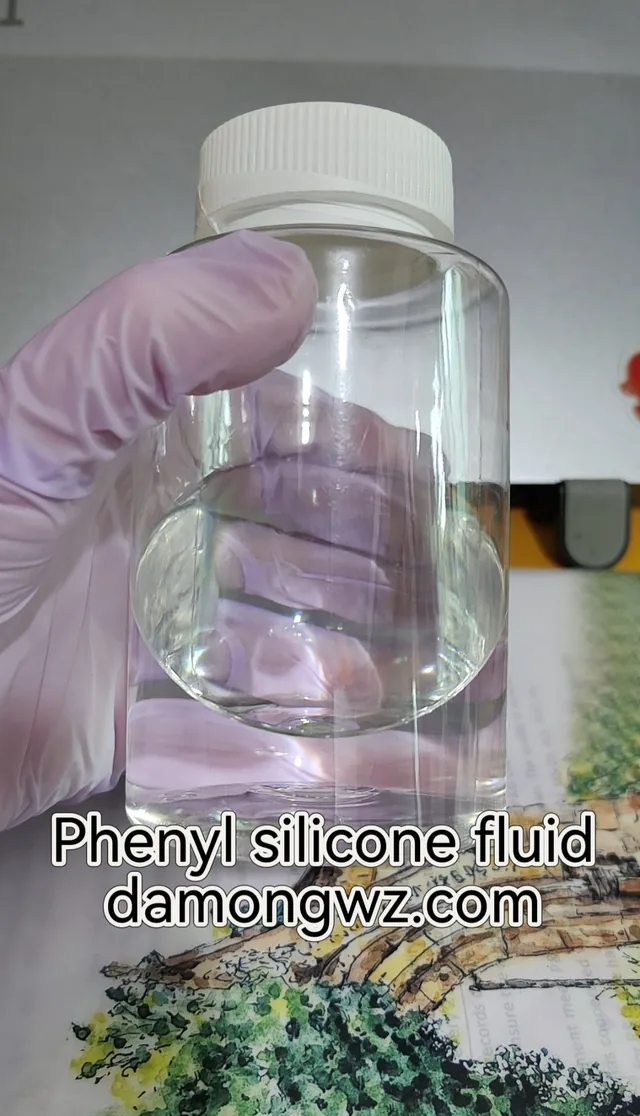
Phenyl vs dimethyl silicone: why choose phenylmethyl silicone oil
Phenyl groups grafted onto the siloxane backbone change the material’s behaviour in four ways that matter for demanding environments:
- Higher thermal stability and oxidation resistance — the fluid keeps its properties at temperatures where dimethyl oil degrades.
- Better radiation resistance — useful in electrical and specialised industrial settings.
- Higher refractive index — a plus where optical or gloss properties matter (see our cosmetic phenyl line below).
- Lower pour point — phenylmethyl fluids stay pumpable at lower temperatures than standard dimethyl oil.
For a quick reference: a typical dimethyl silicone fluid (PDMS) serves roughly −50 to 180 °C, while our phenylmethyl silicone oil covers −70 to 330 °C. That wider, lower window is the single biggest reason buyers move to phenyl when the system runs hot or sees cold starts.
WZ255 series at a glance
Damongwz supplies three industrial phenylmethyl silicone grades, all sharing INCI Phenylmethyl Silicone Oil (CAS 63148-58-3):
| Grade | Viscosity (25°C, mm²/s) | Refractive Index (25°C) | Flash Point (°C, open cup) | Service Temp | Primary use |
|---|---|---|---|---|---|
| WZ250-30 | 30 ± 5 | 1.4700–1.4800 | ≥ 240 | −70 to 330 °C | Low-viscosity heat carrier, damping fluid |
| WZ255-150 | 150 ± 10 | 1.4800–1.5000 | ≥ 300 | −70 to 330 °C | General heat-transfer medium, lubricant base oil |
| WZ255-500 | 500 ± 25 | 1.4900–1.5330 | ≥ 330 | −70 to 330 °C | High-viscosity heat carrier, lubricating base oil |
All three grades share INCI Phenylmethyl Silicone Oil, CAS 63148-58-3. Figures are typical values; confirm exact tolerances on the issued TDS.
How to choose phenylmethyl silicone fluid by application
- High-temperature heat-transfer system → WZ255-150 or WZ255-500. Choose by how the fluid must flow through your pump and loop: 150 mm²/s pumps easily in most circulating systems; 500 mm²/s suits slower, higher-film-strength duties.
- Lubricating oil and grease base → WZ255-500. Its high flash point and film strength make it the natural base stock for high-temperature greases and oils.
- Low-temperature, damping or precision systems → WZ250-30. The 30 mm²/s grade stays mobile and is easy to meter.
- Cosmetics and personal care → a different product line entirely. Our cosmetic phenyl fluids are W555 (high refractive index, high gloss) and W556 (phenyl trimethicone, hair shine and silky feel) — see the Phenyl Silicone Fluids page. Do not substitute industrial WZ grades into personal-care formulas.
How to choose by specification: viscosity, flash point, temperature
When screening a grade against your specification, walk this checklist:
- Operating temperature window — confirm both the maximum continuous temperature and any cold-start temperature fall inside −70 to 330 °C.
- Viscosity at system temperature — pumpability and heat-transfer coefficient depend on viscosity; pick the grade whose viscosity matches your pump and loop design.
- Flash-point margin — keep a comfortable gap between the fluid’s open-cup flash point and your maximum operating temperature. This is where WZ255-500’s ≥ 330 °C flash point earns its place.
- Compatibility and solubility — check compatibility with seals, metals and any co-fluids in the system before commissioning.
Procurement and acceptance tips
Treat phenyl silicone purchasing like any other critical raw material:
- Request the TDS and COA up front, and confirm the CAS number (63148-58-3 for our phenylmethyl oil).
- Ask for flash-point and viscosity test reports so you can verify the values in the table above.
- Sample before bulk. We supply evaluation samples and full export documentation (TDS, COA, MSDS) so your QC team can qualify the grade before a full order.
We supply the WZ255-series phenylmethyl silicone oil to buyers across Southeast Asia, the Middle East and China, with full export documentation and per-batch COA so overseas QC teams can qualify the grade before a bulk order.
For the complete industrial range, see our Silicone for Industrial Use page; for cosmetic phenyl fluids, see Phenyl Silicone Fluids; and for the full portfolio, the products hub.
FAQ
What is the difference between phenyl silicone fluid and standard dimethyl silicone oil?
Phenyl silicone fluid replaces some methyl groups on the siloxane backbone with phenyl groups. The result is higher thermal stability, better oxidation and radiation resistance, a higher refractive index, and a lower pour point than standard dimethyl (PDMS) oil. In service-temperature terms, dimethyl silicone typically covers about −50 to 180 °C, while phenylmethyl silicone oil covers −70 to 330 °C.
What temperature range can phenylmethyl silicone fluids withstand?
Our industrial phenylmethyl silicone oil (WZ250-30, WZ255-150, WZ255-500) is specified for continuous service from −70 to 330 °C. Always keep a safety margin between the fluid’s open-cup flash point and your maximum operating temperature — WZ255-500 offers the highest flash point at ≥ 330 °C.
Which phenyl silicone grade should I use for a high-temperature heat-transfer system?
For a circulating heat-transfer loop, start with WZ255-150 (150 mm²/s) for easy pumping, or WZ255-500 (500 mm²/s) where higher film strength or a larger flash-point margin is needed. For low-temperature or damping duties, WZ250-30 (30 mm²/s) is the right choice. Match the viscosity to your pump and loop design.
Can phenyl silicone fluid be used in cosmetics or personal care?
Not the industrial grades. Our industrial phenylmethyl silicone oil (WZ250-30, WZ255-150, WZ255-500, CAS 63148-58-3) is formulated for heat transfer and lubrication, not for skin or hair contact. For cosmetic use, choose our dedicated cosmetic phenyl fluids — W555 (high refractive index, gloss) and W556 (phenyl trimethicone, hair shine and silky feel) — on the Phenyl Silicone Fluids page.
Do you provide samples, TDS and COA for the WZ255 series?
Yes. We supply evaluation samples and full documentation for the WZ255 series — TDS, COA with flash-point and viscosity data, and MSDS — together with complete export documents so your QC team can qualify the grade before a bulk order.