Outside cosmetics, silicone fluids quietly do some of the hardest jobs in a factory: letting a molded part fall out cleanly, making a towel feel like suede, keeping a paint film from cratering, and lubricating a bearing at 300 °C. This guide walks through the four most common applications and the selection logic behind them.
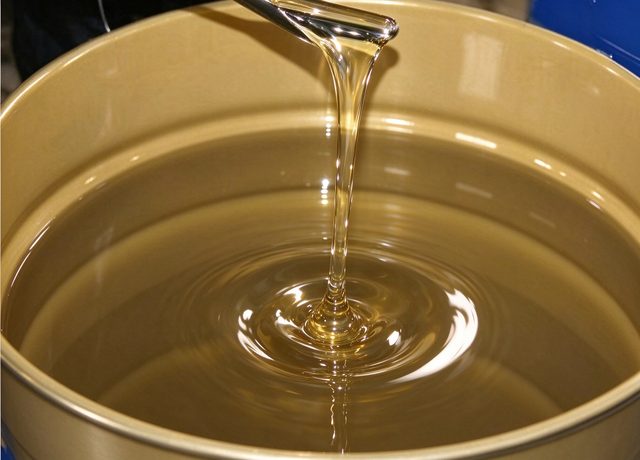
Why PDMS is the default industrial fluid
Most industrial silicone fluids are polydimethylsiloxane (PDMS) — the same molecule family as cosmetic dimethicone, but supplied at industrial purity and viscosity. Three properties make PDMS useful where mineral oils and esters fail:
- Inertness. PDMS is chemically stable, physiologically inert and compatible with most plastics, rubbers and metals. It does not react with the substrate it releases or lubricates.
- Wide temperature range. Damongwz dimethyl silicone oil (WZ-201) stays useful from −50 to 180 °C. For sustained high heat, phenylmethyl silicone oil (WZ250 / WZ255) reaches −70 to 330 °C.
- Low surface tension. Silicone spreads into a thin, uniform film and beads water, which is exactly what you want for release, water repellency and coating flow.
PDMS also resists oxidation and shear, and its viscosity changes very little with temperature — a 100 cSt fluid at room temperature is still pourable at 150 °C, unlike mineral oil which thickens or breaks down.
Application 1 — Mold release agent
Silicone release agents let rubber, plastic, polyurethane foam and tire components demold without tearing or sticking. The choice is mainly about viscosity and dilution:
| Use pattern | Recommended grade | Viscosity | How to apply |
|---|---|---|---|
| Spray / dip, fast flash-off | WZ-201 dimethyl | 10–100 cSt | Dilute 1–5% in solvent (or use WZ2011 emulsion in water) |
| Durable wipe-on film | WZ-201 dimethyl | 1000–10000 cSt | Apply neat, leaves a long-lasting parting layer |
| Waterborne systems | WZ2011 / WZ2012 / WZ2014 emulsion | 35–66% active | Dilute with water, no solvent needed |
For food-contact and medical use, specify a food-grade silicone and request the relevant certificate — industrial WZ-201 is not automatically food-grade.
Application 2 — Textile and leather finishing
Softness in fabric and leather is where amino-modified silicone earns its premium. The amine value (the nitro column in our spec sheet) controls two things: how strongly the oil binds to the fiber, and how much yellowing you accept.
| Goal | Grade | Amine value | Hand feel |
|---|---|---|---|
| White / pastel fabric, low yellowing | WZ-A11, WZ-A51 | 0.21–0.25 | Natural silk smooth |
| General softener, cost-effective | WZ-A13, WZ-A17 | 0.42–0.60 | Silky / universal |
| Deep, oily softness | WZ-A14, WZ-A15, WZ-A52 | 0.60–0.90 | Oil slick, very soft |
The WZ-A series is built from new linear PDMS and ultra-pure water, with low cyclic siloxane content that already meets European standards — useful if finished textiles are exported to the EU. For easy in-plant dilution, the same chemistry is available as a stable emulsion.
We regularly hear from weaving mills across Indonesia and Vietnam that the biggest complaint with cheaper amino softeners is yellowing on white poplin — switching to a low-amine grade (0.21) removed the reject rate on light colours.
Leather uses the same logic: a light amino or dimethyl pass restores suppleness after tanning and reduces sewing-needle friction.
Application 3 — Coatings, paints and surface treatment
Added at 0.1–1% to a coating, silicone fluid acts as a flow and leveling aid: it suppresses craters and orange-peel, improves mar resistance and adds water beading without changing the film chemistry. Dimethyl fluid is the baseline; the WZ2011 waterborne emulsion is the practical choice for water-based paints.
In silicone-enhanced polishes and car-care products, the same low surface tension gives the deep, streak-free gloss buyers associate with premium surface treatments. The rule of thumb is to start small — overdosing silicone can cause recoat adhesion problems and slip, so validate on the actual resin system before scaling.
Application 4 — Lubrication, damping and high-temperature heat transfer
Dimethyl fluid lubricates plastic and rubber parts — O-rings, conveyor bushings, syringe plungers — where petroleum oil would swell or degrade the polymer. It also doubles as a damping fluid in meters and sensors because its viscosity is stable across temperature.
For sustained high heat, straight dimethyl runs out of headroom near 180 °C. That is where phenylmethyl silicone oil takes over:
| Grade | Viscosity (cSt) | Service ceiling | Typical use |
|---|---|---|---|
| WZ250-30 | 30 ± 5 | 240 °C flash point | Light heat-transfer and damping |
| WZ255-150 | 150 ± 10 | 300 °C flash point | Lubricating base oil, heat carrier |
| WZ255-500 | 500 ± 25 | 330 °C flash point | High-temperature heat-transfer fluid |
Phenylmethyl fluid also resists oxidation and radiation, which is why it appears in high-temperature chains, ovens and electrical insulation rather than just as a lubricant.
How to choose the right grade
If you only remember one table, make it this one:
| Job | Start with | Note |
|---|---|---|
| Mold release (spray) | WZ-201 dimethyl, 10–100 cSt | Dilute in solvent or WZ2011 emulsion |
| Mold release (durable) | WZ-201 dimethyl, 1000–10000 cSt | Apply neat |
| Textile / leather softener | WZ-A series amino (match amine to colour sensitivity) | 0.21 for white, 0.6–0.9 for deep softness |
| Coating leveling / water beading | WZ2011 emulsion or WZ-201 dimethyl | Start at 0.1–0.5% |
| Lubrication (plastic / rubber) | WZ-201 dimethyl | Inert to polymers |
| High-temperature (> 180 °C) | WZ250 / WZ255 phenylmethyl | Up to 330 °C |
Damongwz provides dimethyl silicone fluid (dimethicone) across 5 to 100,000 cSt and supplies it as a silicone oil partner to factories in Vietnam, Indonesia, the Philippines, Thailand and the UAE, alongside the amino and phenylmethyl ranges. Full specifications for every grade are on the Silicone for Industrial Use category page.
FAQ
Can the same silicone oil be used for both mold release and textile softening?
Straight dimethyl silicone oil (WZ-201) is inert and can physically do both jobs. But amino-modified oil gives the real textile softness, and amino should be avoided on parts that will later be painted or bonded because it can interfere with adhesion. Use dimethyl for release, amino for textile.
What viscosity should I start with for mold release?
For a spray or dip applied as a thin film, start with 10 to 100 cSt dimethyl diluted 1 to 5 percent in solvent, or use a waterborne emulsion such as WZ2011. For a durable wipe-on parting layer, use 1000 to 10000 cSt neat.
Is industrial silicone fluid food-grade or medical-grade?
The standard industrial WZ-201 grade is not automatically food-grade. For food-contact or medical applications, specify a food-grade silicone and request the corresponding certificate from the supplier before qualifying the material.
What is the real temperature limit of these fluids?
Dimethyl silicone oil (WZ-201) is stable from roughly minus 50 to 180 degrees C. For sustained high-temperature service, phenylmethyl silicone oil (WZ250 / WZ255) extends the ceiling to about 330 degrees C and also resists oxidation and radiation.
Do amino silicone softeners yellow white fabric?
Higher amine-value grades (0.6 to 0.9) give deeper softness but more yellowing risk on light colours. For white or pastel textiles, choose a low-amine grade such as WZ-A11 or WZ-A51 (amine 0.21 to 0.25) to keep reject rates low.